
Short answer: It depends on what you mean by “whiten.”
Many whitening toothpastes can help reduce extrinsic surface stains, making teeth look cleaner or brighter.
That is not the same as bleaching, which changes the intrinsic colour of the tooth.
If you expect toothpaste to lighten the natural tooth colour by several shades in the same way as a peroxide bleaching treatment, the result may not match your expectations.
The first question should therefore be:
Are you trying to remove surface stains, or change the intrinsic colour of the tooth?
Why can whitening toothpaste seem like it “doesn’t work”?
A major reason is the gap between expectation and mechanism.
Words such as “Whitening”, “White” or “Bright” can suggest that the natural colour of the tooth will change dramatically.
In reality, many whitening toothpastes are primarily designed to reduce stains on the outer tooth surface.
So the statement:
“I used it, but my teeth did not become white.”
does not necessarily mean the product did nothing.
The expected result may simply have been different from the result the product was designed to deliver.
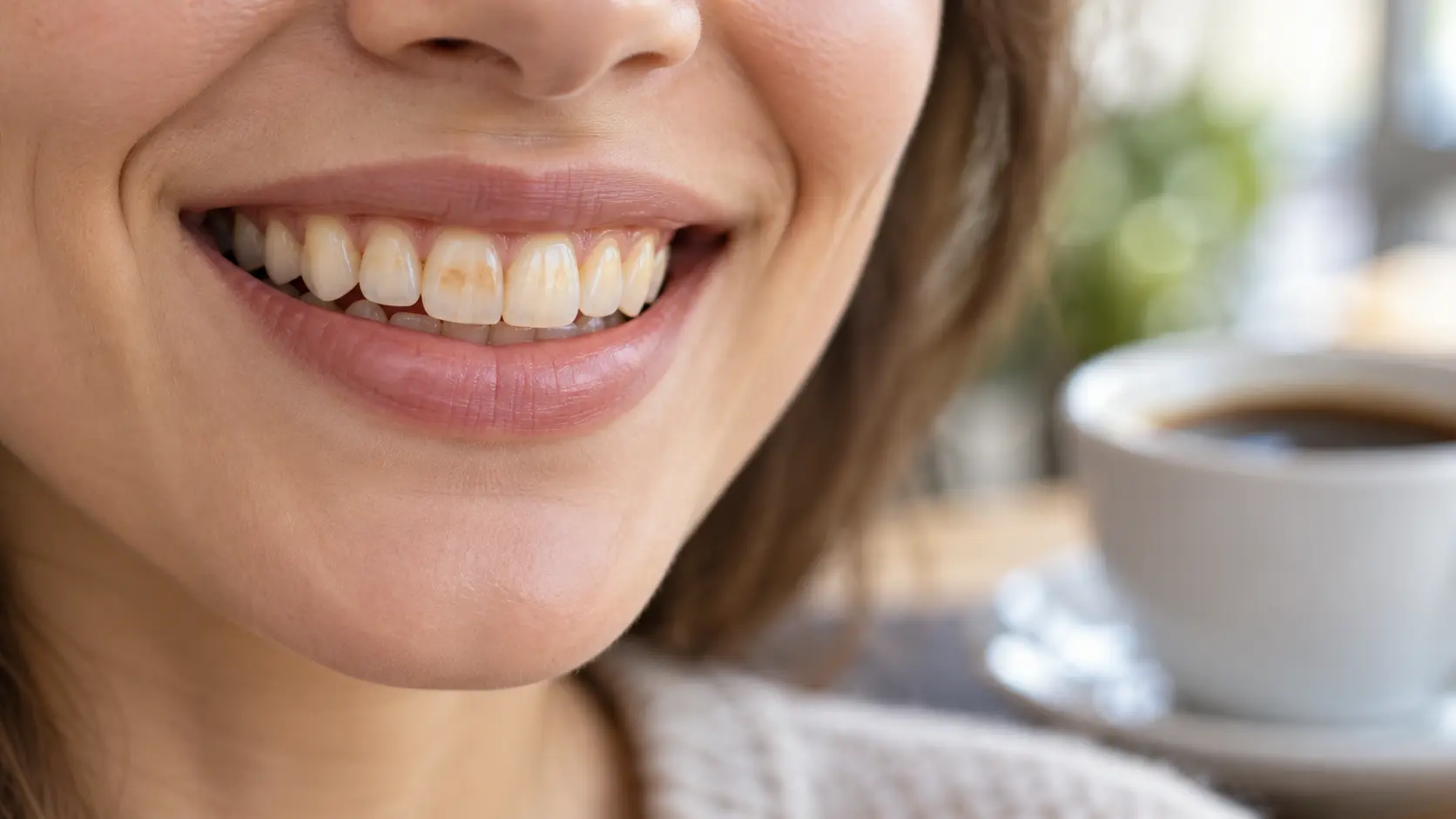
What are extrinsic stains?
Extrinsic stains are discolourations that accumulate on the external tooth surface.
They may be associated with:
- coffee,
- tea,
- coloured beverages,
- certain foods,
- tobacco,
- everyday habits.
The American Dental Association distinguishes these surface stains from intrinsic changes in tooth colour.
Many whitening toothpastes primarily work in this surface-stain territory.
What is intrinsic tooth colour?
Intrinsic colour comes from within the tooth structure and is different from surface staining.
It can be influenced by natural tooth structure, ageing and other internal factors.
So:
Removing surface stain
and
changing the intrinsic colour of the tooth
are different processes.
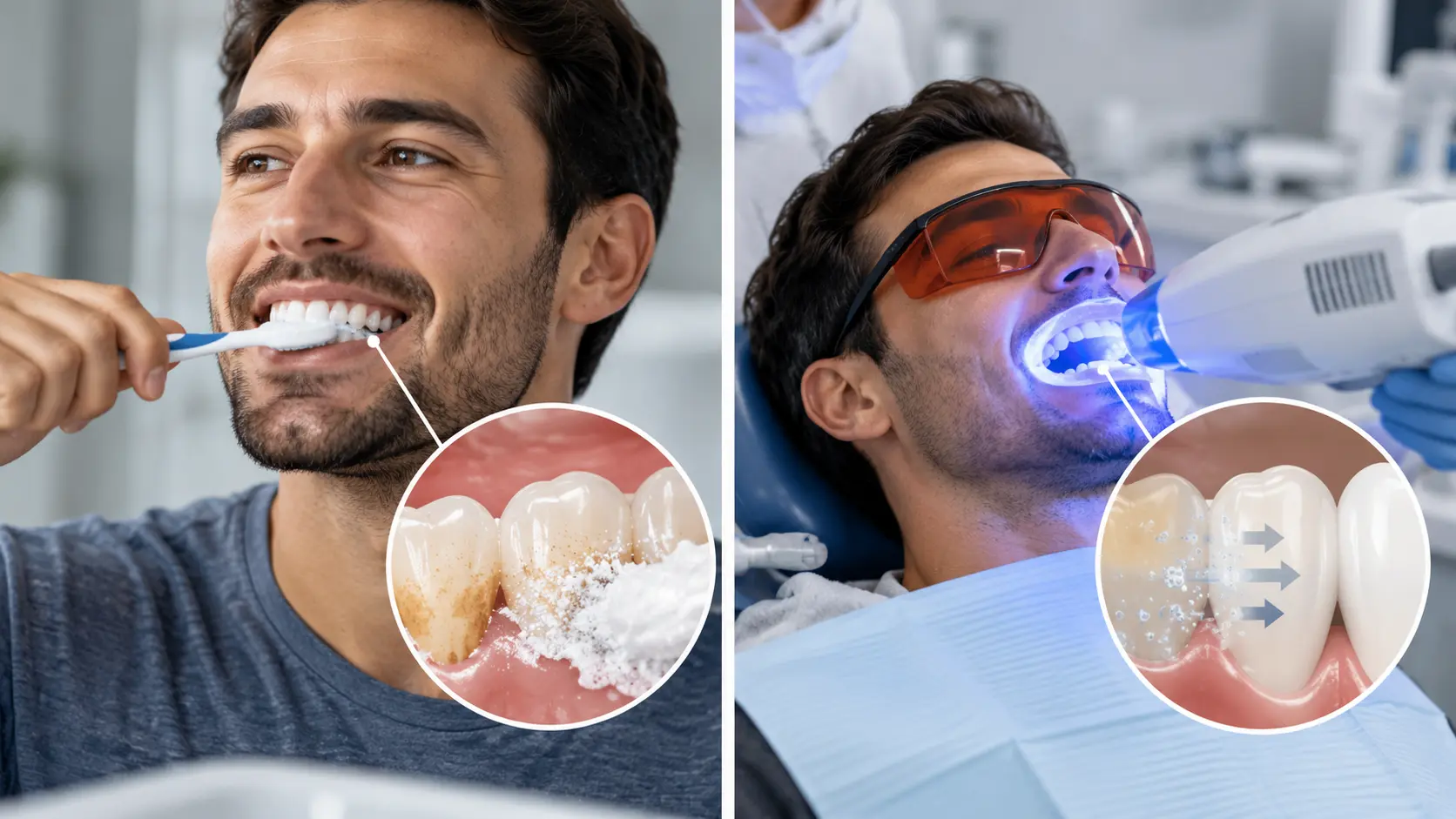
Is whitening the same as bleaching?
No.
Whitening through surface-stain removal
Many whitening toothpastes use controlled cleaning systems and abrasives to help reduce external stains.
Bleaching
Bleaching generally uses agents such as:
- hydrogen peroxide,
- carbamide peroxide,
to chemically change tooth colour.
That means:
“Whitening toothpaste”
does not automatically mean:
“Peroxide bleaching effect.”
How does whitening toothpaste remove surface stains?
The mechanism varies by formula.
One common approach is the use of cleaning ingredients such as hydrated silica.
During brushing, these systems can help remove deposits and external staining from the tooth surface.
Some formulas may also contain ingredients intended to reduce stain re-deposition.
However:
The presence of an ingredient does not prove the finished product’s performance.
A specific claim such as “helps remove surface stains” is best supported by direct testing of the final formulation.
What does the scientific evidence show?
A 2025 updated systematic review and meta-analysis evaluated 14 randomised controlled trials.
Overall, whitening dentifrices reduced the intensity and area of extrinsic tooth staining compared with conventional dentifrices.
However, there was substantial heterogeneity across studies, meaning products, methods and outcomes were not identical.
A more accurate conclusion is therefore:
Some whitening toothpastes can help reduce extrinsic surface stains, but the size of the effect depends on the formulation, use conditions and type of stain.
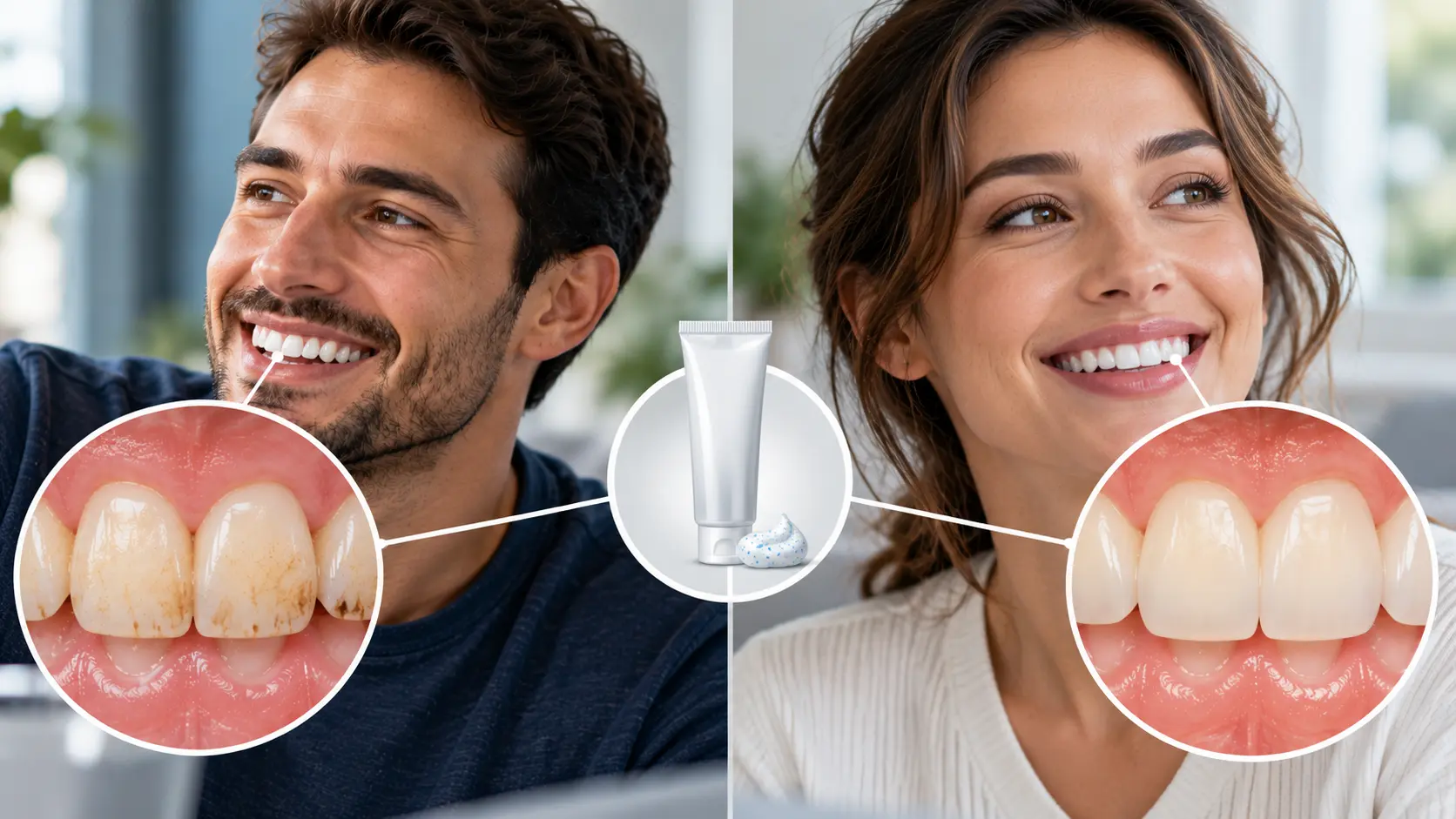
Why do some people see a bigger difference than others?
Because the starting point differs.
A person with visible coffee or tea staining may notice a larger change if some of those stains are removed.
Another person may have little surface staining, and most of the visible colour may reflect the natural shade of the tooth.
In that case, surface cleaning may produce little dramatic colour change.
So the result depends not only on the product, but also on the type of discolouration.
Can coffee and tea stain teeth?
Yes.
Coffee and tea are commonly associated with extrinsic tooth staining.
This does not mean they need to be treated as “forbidden” foods or drinks.
A more realistic approach is:
Maintain everyday habits while using appropriate oral care to manage surface staining.
Does using more whitening toothpaste make it work faster?
No.
Using more product or brushing more often than directed does not automatically produce greater whitening.
With stain-removal products, the balance between cleaning performance and abrasivity matters.
Professional product evaluation may therefore consider both stain-removal performance and measures such as RDA/REA.
Does more abrasive mean more whitening?
Not necessarily.
Abrasive systems can contribute to surface-stain removal, but the goal is not maximum abrasion.
A good daily-use formula should balance cleaning with appropriate surface compatibility.
Can whitening toothpaste cause sensitivity?
This question requires an important distinction between whitening toothpaste and peroxide bleaching.
Transient tooth sensitivity is a well-established adverse effect of peroxide-based bleaching treatments.
That evidence should not automatically be applied to every whitening toothpaste.
Toothpaste formulations differ.
So it is not accurate to say:
“All whitening toothpastes cause sensitivity.”
It is equally inappropriate to claim:
“This product causes zero sensitivity”
without direct tolerability evidence for that specific product.
What should you do if sensitivity develops?
If repeated sensitivity, pain or unexplained discomfort starts after a new product is introduced, do not automatically dismiss it as a “normal whitening effect”.
Persistent or unexplained symptoms should be discussed with a dental professional.
Can whitening toothpaste make teeth several shades lighter?
That claim requires specific evidence.
If a product mainly removes surface stain, the natural, cleaner tooth colour may become more visible.
That is different from chemically lightening intrinsic tooth colour by several shades.
Claims such as:
- “2 shades whiter”,
- “3 shades brighter”,
- “whiter in 7 days”
require direct product testing and validated measurement.
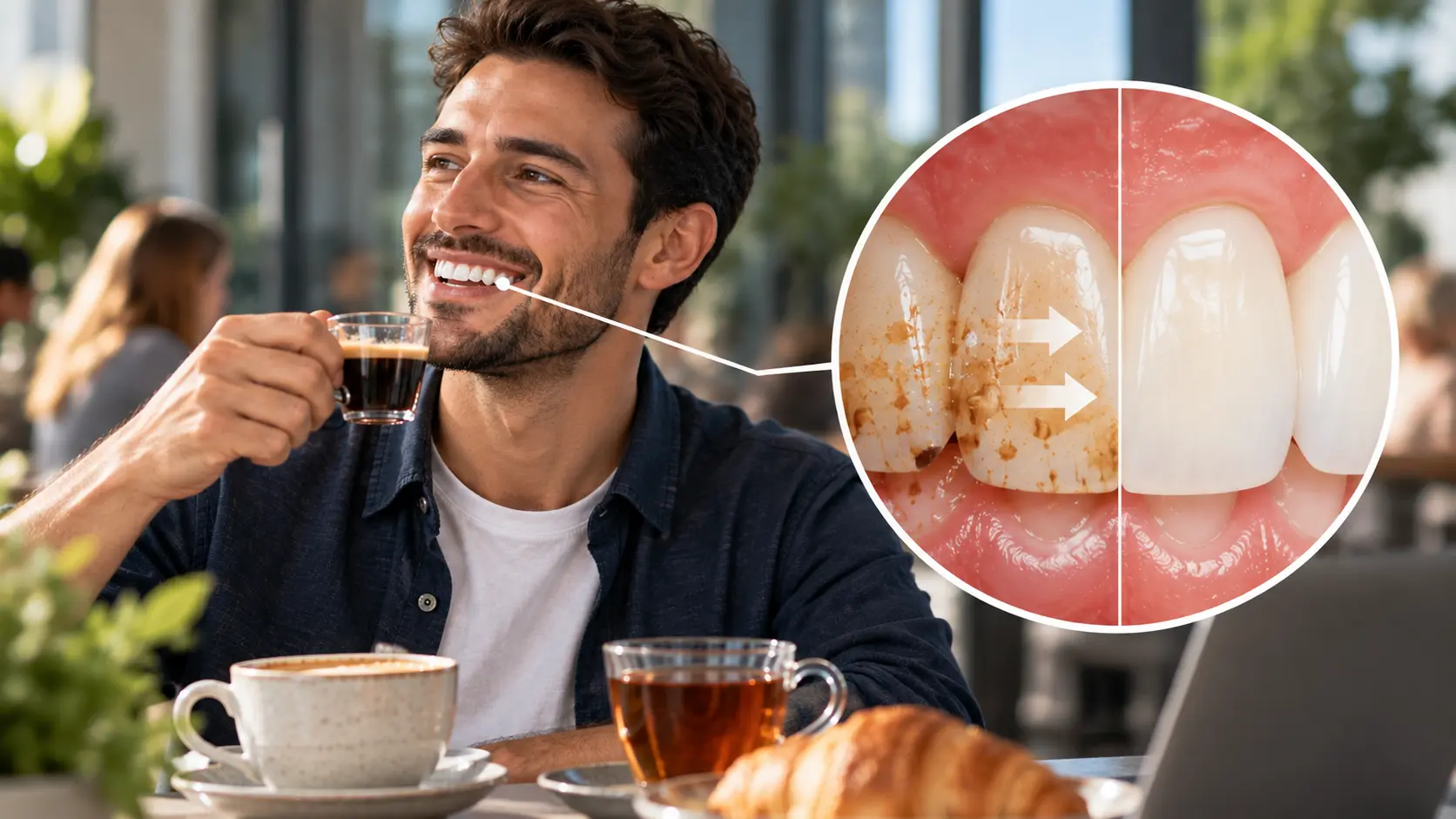
Are before-and-after photos reliable?
Not by themselves.
Tooth colour in photographs can be affected by:
- lighting,
- white balance,
- exposure,
- camera angle,
- tooth-surface hydration,
- image processing.
For scientific assessment, standardised shade measurements or instrumental colour measurements are more reliable.
What should you look for when choosing a whitening toothpaste?
1. Define your goal
Are you trying to reduce coffee, tea or other surface stains?
Or are you expecting a change in the natural tooth colour?
2. Do not rely on the word “whitening” alone
Look at what the product specifically claims.
“Helps remove surface stains” is more precise than a vague phrase such as “Extreme White”.
3. Consider the formulation
Ingredients such as silica can be consistent with a surface-cleaning mechanism, but the final product still requires its own evidence.
4. Keep expectations realistic
Whitening toothpaste is not the same as professional bleaching.
5. Do not ignore persistent sensitivity
Repeated or unexplained symptoms should be evaluated appropriately.
The Fulgent approach: realistic whitening
Whitening should not mean creating pressure for “perfect white” teeth.
Natural tooth colour varies between individuals.
A more responsible approach is:
Understand the type of discolouration, manage surface stains, and choose care that fits the actual need.
The FULGENT Scientific Evidence & Claims Library recognises hydrated silica + pentasodium triphosphate as a scientifically credible surface-stain care platform. However, Fulgent-specific claims for stain removal, gentleness or anti-stain performance require direct finished-product testing.
Frequently Asked Questions
Does whitening toothpaste really work?
Some whitening toothpastes can help reduce extrinsic surface stains, making teeth appear cleaner or brighter. This is not the same as bleaching.
Can whitening toothpaste remove coffee and tea stains?
Some formulas can help reduce extrinsic staining associated with coffee and tea.
What is the difference between whitening and bleaching?
Whitening toothpaste often focuses on surface-stain removal. Bleaching usually uses peroxide agents to chemically change tooth colour.
Why am I not seeing a dramatic result?
You may have little surface staining, or most of the visible colour may be your natural intrinsic tooth shade.
Can whitening toothpaste cause sensitivity?
This cannot be generalised to all products. Formulations differ. Persistent sensitivity should be discussed with a dental professional.
Is a more abrasive toothpaste better at whitening?
No. The goal is an appropriate balance between cleaning performance and abrasivity.
Scientific Sources
- American Dental Association — Whitening
https://www.ada.org/resources/ada-library/oral-health-topics/whitening
- American Dental Association — Toothpastes
https://www.ada.org/resources/ada-library/oral-health-topics/toothpastes
- Effect of Whitening Dentifrice on Discoloration of Tooth Surface: An Updated Systematic Review and Meta-analysis (2025)
- FULGENT Scientific Evidence & Claims Library, 2026
Last scientific review: October 2026 Content type: Consumer education Disclaimer: This article is for general educational purposes and does not replace individual evaluation or diagnosis by a dental professional.