
Short answer: No.
A strong burning, cooling, tingling or intense mint sensation does not, by itself, mean that a mouthwash is more effective.
These sensations are part of a product's sensory experience. Actual performance depends on factors such as the active ingredients, their concentrations, the complete formulation, how the product is used, and the purpose for which it was developed.
So the more useful question is not “How much does it burn?” but “What is this product designed to do, and what evidence supports that role?”
Why does mouthwash burn?
There is no single cause. The sensory profile of a mouthwash can be influenced by flavouring ingredients, menthol, certain essential oils or volatile components, alcohol content, the overall formulation, contact time, and individual sensitivity of the oral tissues.
Two products can therefore feel very different in the mouth without that difference telling us which one is more effective.
Why do people associate burning with effectiveness?
Oral-care products are highly sensory. Strong mint, cooling, tingling or burning is noticeable immediately. That can create an intuitive shortcut:
Stronger sensation = stronger effect
Scientifically, however, the two are not equivalent.
Menthol, for example, can create a pronounced cooling sensation. The intensity of that sensation does not, on its own, show how well a product performs against plaque, caries risk, gum-health outcomes or clinically measured oral malodour.
Freshness can be felt. Efficacy has to be measured.
Is a mouthwash that burns more strongly more effective?
Not necessarily.
A meaningful scientific assessment asks which active ingredients the product contains, at what concentrations, what it is designed to do, how it should be used, and what evidence exists for the finished formulation.
For example, cetylpyridinium chloride (CPC) is used in some therapeutic mouthrinses.
Systematic reviews and meta-analyses published in 2025 found that CPC-containing mouthrinses, at studied concentrations and in studied formulations, can provide additional benefits for plaque and gingival outcomes when used alongside toothbrushing.
That does not mean every CPC product performs identically. Concentration, formulation, use conditions and finished-product evidence matter.
More burning does not mean more CPC activity or greater clinical efficacy.
Is “how much it burns” used as a measure of efficacy in clinical studies?
Generally, no.
Depending on the purpose of a mouthrinse, studies may assess plaque indices, gingival inflammation measures, fluoride-related caries outcomes, oral-malodour measurements, tolerability, adverse effects and other safety outcomes.
Burning is more appropriately considered part of sensory experience and tolerability.
Is alcohol-free mouthwash weaker?
No.
Being alcohol-free does not automatically make a mouthwash weaker or ineffective. Alcohol may serve as part of the solvent or carrier system in some formulations, but its presence is not the main determinant of efficacy.
Therefore, “with alcohol = effective” and “alcohol-free = ineffective” are both oversimplifications.
Does freshness matter?
Yes.
Freshness is an important part of the oral-care experience. After food, coffee or tea, or before a social interaction, wanting a cleaner, fresher mouthfeel is entirely understandable.
But perceived freshness and clinically measured control of oral malodour are not the same outcome.
Menthol and flavour systems can produce a strong sense of freshness. Claims such as “all-day freshness”, “eliminates the cause of bad breath” or long-duration malodour control require separate, product-specific evidence.
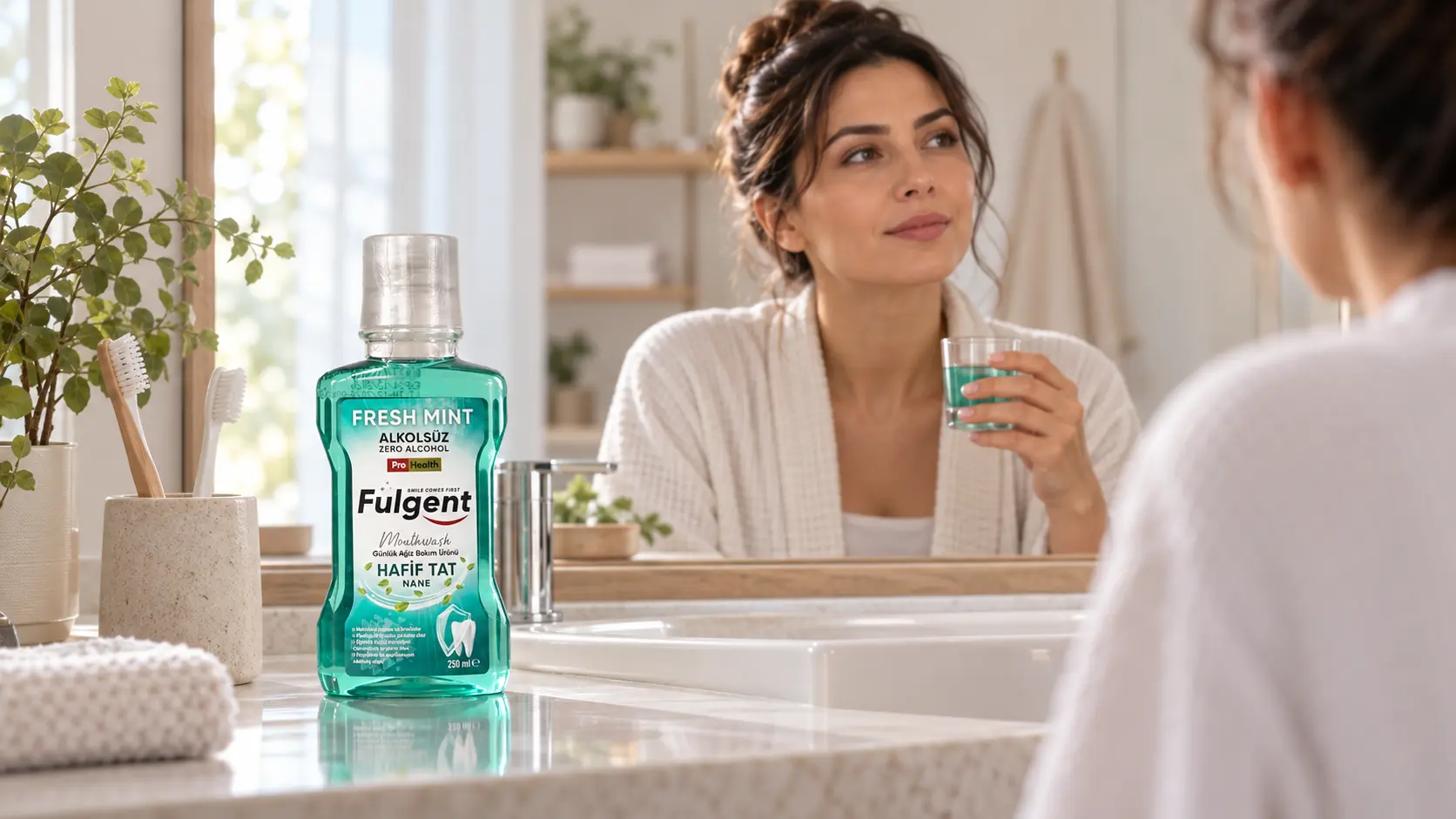
What if a mouthwash burns too much?
A short-lived intense flavour or cooling sensation is not the same as persistent or uncomfortable irritation.
Do not assume that a product is “working harder” if you experience significant or persistent burning, pain, mouth sores, swelling, peeling, or repeated and unexplained tissue changes.
These symptoms do not establish a diagnosis on their own. Persistent or unexplained symptoms should be discussed with a dental professional.

If a mouthwash does not burn at all, could it still work?
Yes.
A milder sensory profile does not automatically mean weaker performance.
The active system, active concentration, intended role, directions for use and evidence supporting the finished product should all be assessed separately.
“How strong does it feel?” and “What does it do?” are not the same question.
What is the role of mouthwash in a daily oral-care routine?
Mouthwash is generally an adjunct, not a replacement for mechanical cleaning.
The American Dental Association notes that mouthrinse does not replace toothbrushing or interdental cleaning. Appropriate products may provide additional benefits depending on individual needs and the formulation used.
Mouthwash is therefore not a shortcut around brushing.
What should you look for when choosing a mouthwash?
- Why are you using it? Freshness, daily support, fluoride exposure, or a specific oral-care need?
- What are the active ingredients? Two products in the same category may have different formulations and intended roles.
- What are the directions for use? Dose, contact time, frequency and age restrictions can differ.
- Can you use it comfortably and consistently? A product that is too uncomfortable to use as directed may be difficult to maintain as part of a sustainable routine.
- Are the claims clear and evidence-based? Statements such as “instant”, “all day”, “100%” or “zero sensitivity” require direct and appropriate substantiation.
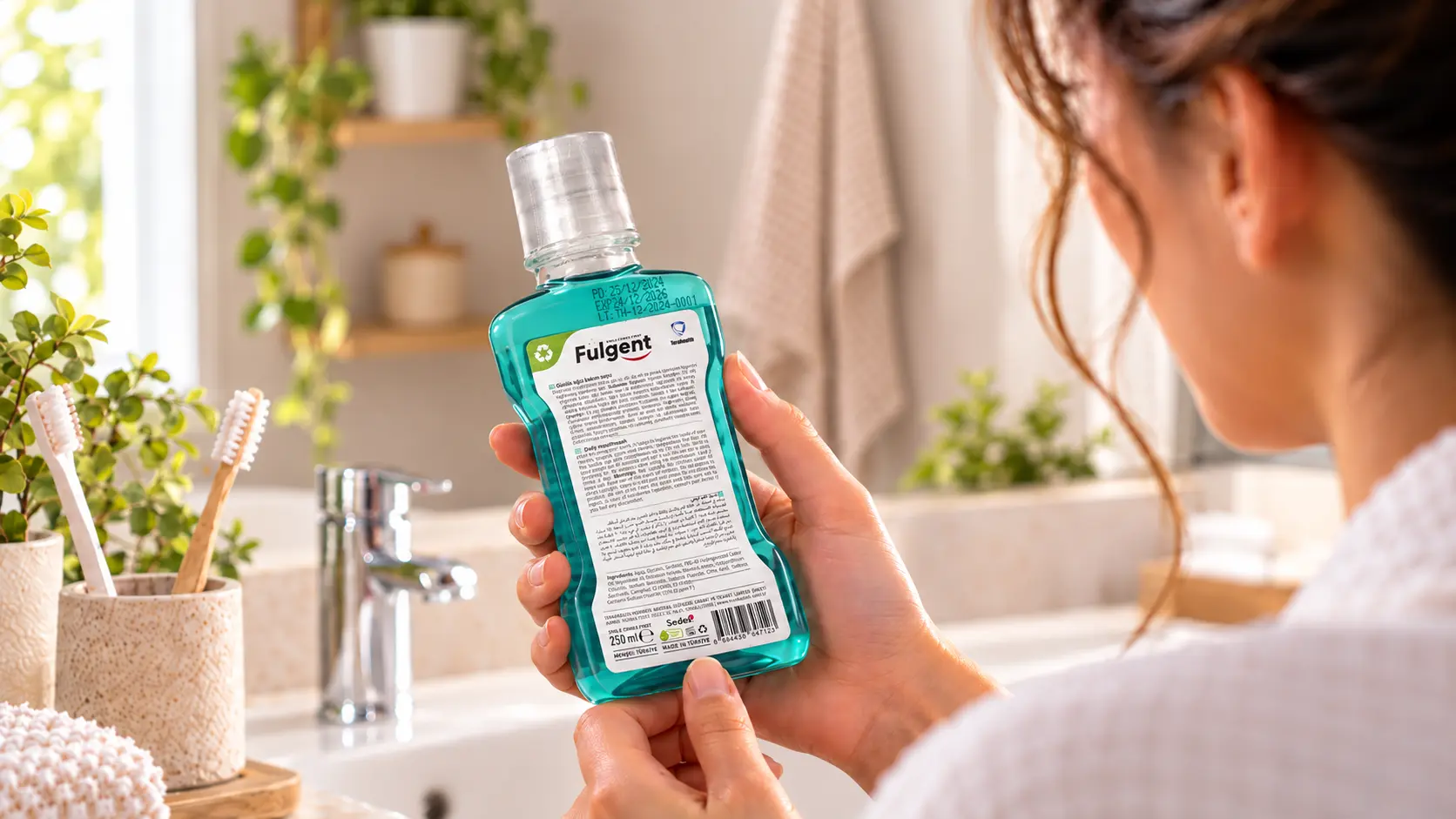
What is the better way to judge a mouthwash?
Rather than judging only by burning, mint intensity, cooling, foaming or large claims on the front of the pack, consider three things together:
Your actual need + an appropriate formulation + reliable evidence
The Fulgent approach: need first, product second
At Fulgent, the starting question is not “Which product feels strongest?” It is “What do I actually need?”
Different people may prioritise daily care, freshness, sensitivity care or gum care.
That is why one product does not necessarily play the same role for everyone.
Know your need. Choose care that fits it.
Frequently Asked Questions
Does mouthwash have to burn to work?
No. Burning is part of the sensory profile and is not a direct measure of clinical efficacy.
Does a burning sensation mean bacteria are being killed?
No. Antimicrobial activity cannot be inferred from burning alone.
Can alcohol-free mouthwash be effective?
Yes. Alcohol-free does not automatically mean weaker. Efficacy depends on the formulation, active ingredients and intended use.
What should I do if mouthwash burns my mouth badly?
Do not treat significant or persistent burning, pain, sores, swelling or other unusual symptoms as a sign of efficacy. Persistent or unexplained symptoms should be discussed with a dental professional.
Can mouthwash replace brushing?
No. Appropriate mouthrinses may complement the routine, but they do not replace toothbrushing and interdental cleaning.
Does stronger freshness mean better bad-breath control?
Not necessarily. Sensory freshness and clinically measured malodour control are different outcomes.
Scientific Sources
- American Dental Association — Mouthrinse (Mouthwash).
https://www.ada.org/resources/ada-library/oral-health-topics/mouthrinse-mouthwash
- Mohapatra S, Mohandas R. (2025). Comparative evaluation of the efficacy of cetylpyridinium chloride and essential oil mouthwashes in reducing plaque and gingivitis: a systematic review and meta-analysis.
https://pubmed.ncbi.nlm.nih.gov/40413358/
- The Effect of Cetylpyridinium Chloride Compared to Chlorhexidine Mouthwash on Scores of Plaque and Gingivitis: A Systematic Review and Meta-Analyses (2025).
https://pubmed.ncbi.nlm.nih.gov/40530503/
- FULGENT Scientific Evidence & Claims Library, 2026. Internal evidence and claim-governance source.
Last scientific review: October 2026 Content type: Consumer education Disclaimer: This article is for general educational purposes and does not replace individual evaluation or diagnosis by a dental professional.